


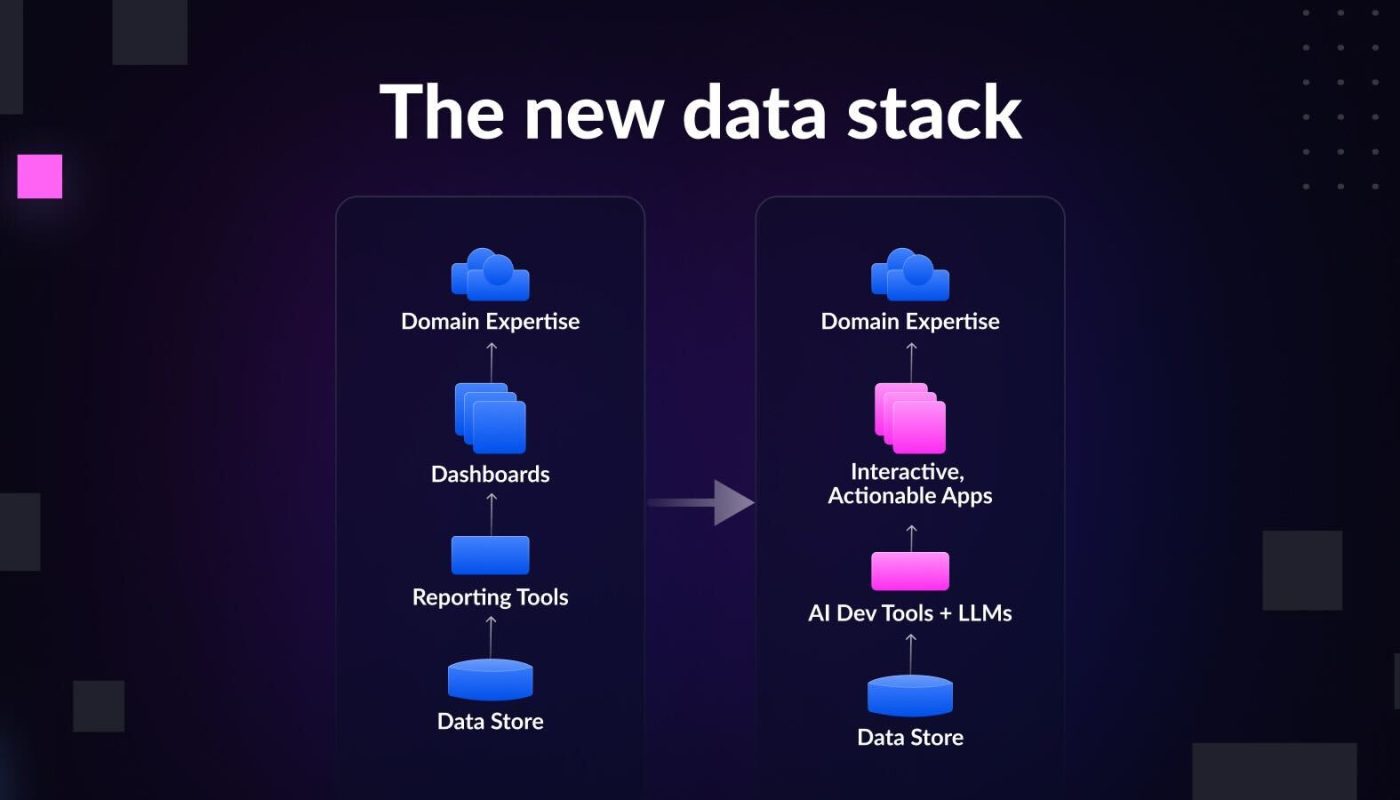
In just a few years, the typical data stack for Amazon and Walmart has undergone a total cosmetic transformation.
Old-school reporting tools are now being replaced by AI development tools, and typical static dashboards are giving way to interactive, actionable apps.
Soon, sophisticated brands and agencies will even be able to automate the troubleshooting and auditing process.
So what’s changing in the data stack? And what does it all mean for businesses like yours?
What was the old-school data stack?
For years, the e-commerce data stack looked relatively stable.
Data store. It started with your data store. Brands and agencies needed some way to pull in their data from Amazon and Walmart, and sort it all according to their granular needs (like by sub-brands or brand vs. non-brand).
Reporting tools. That data then flowed into a set of reporting tools that allowed you to quickly visualize your performance on monthly and year bases.
Dashboards. The data also trickled into real-time dashboards that helped your teams to track performance hour by hour, and make interventions when there’s a downswing.
Domain expertise. On top of that stack, of course, was the expertise that you and your team bring to the table.
Let’s say a product’s revenue dips—it’s your team that is poring over the dashboards and parsing through what went wrong, and what to do about it.
What were the gaps in the old reporting stack?
The old-school reporting system was always too unwieldy to manage entirely in-house.
That’s why brands and agencies have long used third-party partners like Intentwise to assist with their data stores. A good partner builds and maintains data pipes that collect and harmonize your data.
Similarly, many solutions providers popped up to assist with reporting and dashboarding.
But there were still missing pieces. Think of dashboards, for instance: third-party providers have historically focused on building the same package of dashboards to everyone, rather than the customized views that brands and agencies need.
Rarely still do we run into brands and agencies who feel they have every view of performance they could want.
Meet the new Amazon data stack
Here’s a glimpse at the new data stack, supercharged for an era of AI and faster analytics.
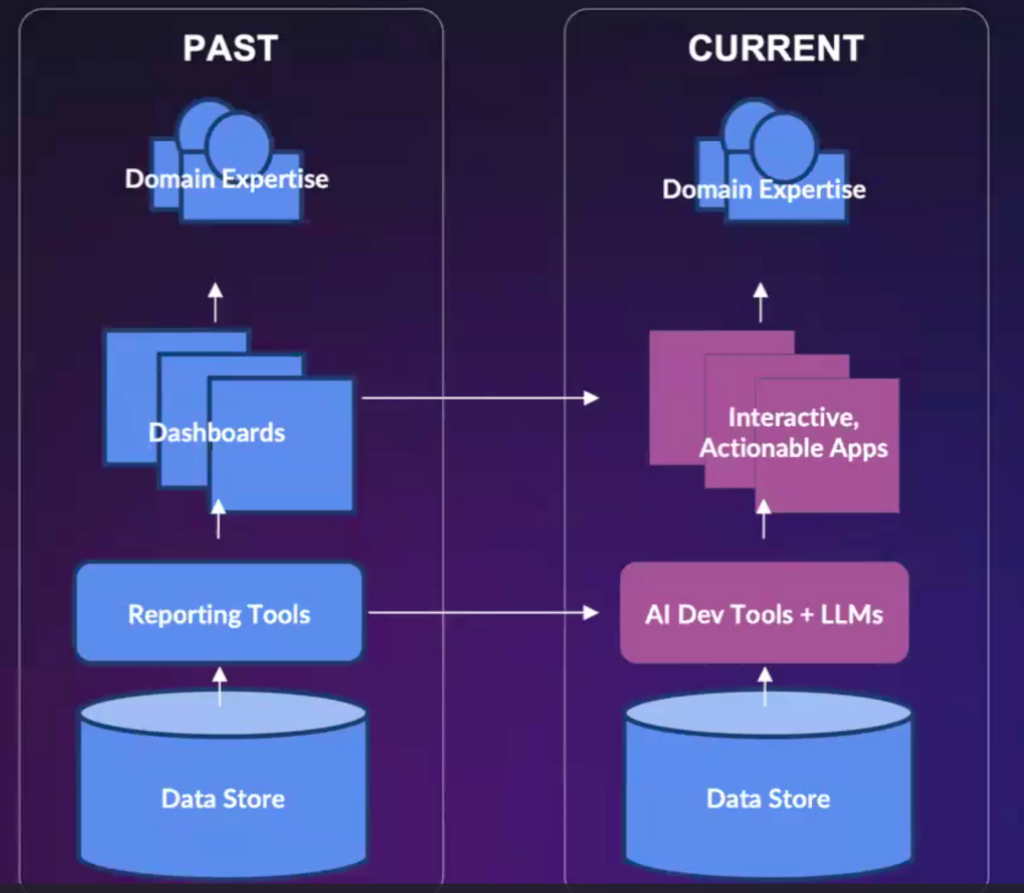
As you can see, while the fundamental importance of a data store to ingest and sort your data remains, many brands and agencies are eschewing the old-school third-party reporting tools.
Instead, they are replacing reporting tools with an AI and LLM-based analytic layer that can flag month-to-month or year-to-year changes for them.
At the same time, smart brands and agencies are phasing out static dashboards that just show them raw performance. Instead, they’re embracing actionable, collaborative applicants that actually let you take action based on the data you’re seeing.
No more clicking around—now dashboards are a source of analysis and action.
What’s coming next for the Amazon data stack?
In the next 6-9 months, we expect another fundamental shift in the typical data stack.
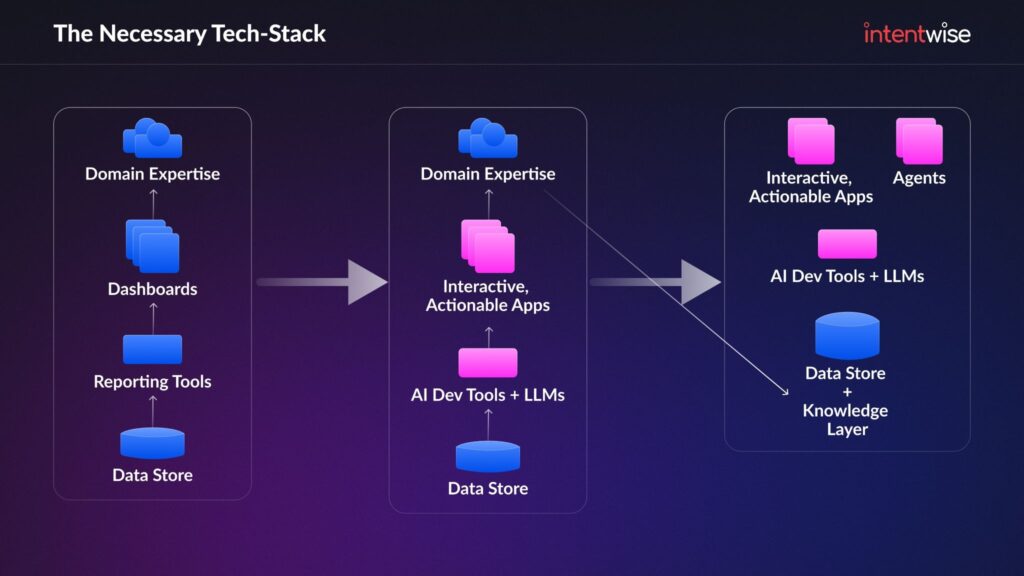
As you can see, you’re still going to need a high-quality data store, but now it’s going to be equipped with an even stronger knowledge layer.
You’ll be able to sort the data coming in from Amazon and Walmart even more granularly than before, ingesting all of your custom product and media taxonomies instantly.
On top of that, you’ll be able to cut your analytics time by outsourcing some of the work to AI agents that can answer many of your analysis questions.
Next time your revenue drops, rather than poring over dashboards to assess the problem, you’ll be able to ask your AI agent what went wrong. The system might flag a price change or a loss of Buy Box, or an ad campaign that has stopped generating the same returns.
Going forward, all of your expertise can be embedded into these types of automated systems. You can say, “Go run me an audit of this account,” or “Research this product and tell me what went wrong,” and your software solution will be able to isolate answers for you.
You’ll also be able to get much more customized interactive apps than ever before.
Have a view of performance you’re craving? Instead of just relying on the typical package of dashboards from your solution provider, you’ll be able to request your own unique views, and get them built and maintained far more easily than ever before.
Intentwise already does this—our Analytics Services team regularly builds custom views for our clients, including omni-channel performance, customer LTV for deal vs. non-deal customers, and much more.
So as a brand and agency, what can you do right now to prepare for the new data stack?
First, remember that, in the AI era, the quality of your data outputs is only as good as the quality of your inputs.
Be sure you own your data, and also that you have data sets that are rich, connected, and enriched according to your needs.
And to prepare for a moment when AI can automate your analytics procedure, begin by documenting your process in depth. Capture the mental analysis trees that you and your teams are executing into a document.
This will then become the inputs into an AI system that allows you to automate your process when the time comes.