
How Alexa for Shopping is changing Amazon product discovery



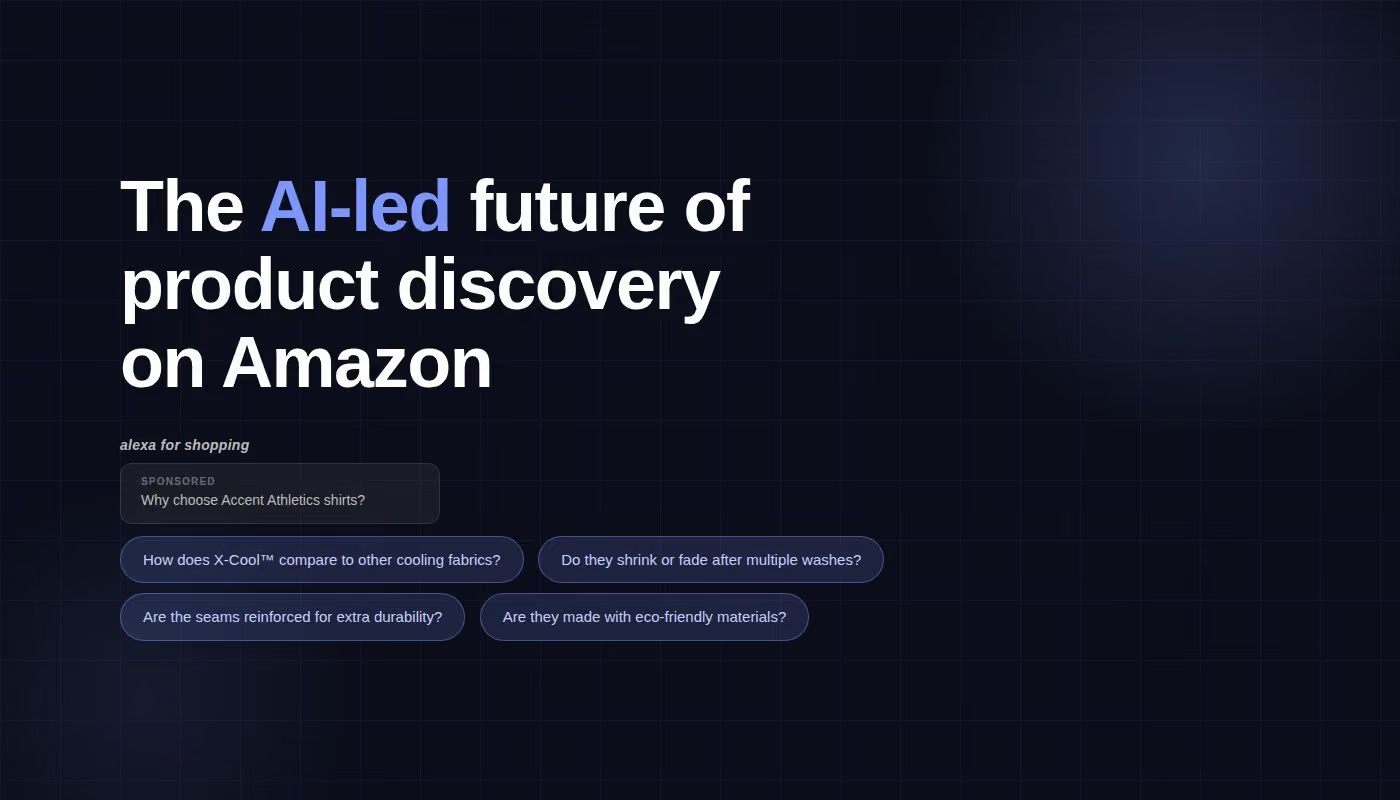
Amazon’s Alexa for Shopping is rewriting how shoppers discover—and search for—products online.
Amazon just announced a whole bunch of updates to its new AI agent, Alexa for Shopping. Chief among them is that Sponsored Ads will now surface in Alexa for Shopping.
This is a big deal, and it’s part of a greater buildout of Alexa for Shopping. After rolling up its old AI shopping assistant, Rufus, into Alexa for Shopping, Amazon is positioning Alexa for Shopping as a new kind of homepage for its online marketplace.
Alexa for Shopping is a multi-platform AI agent. Shoppers can ask questions in a chat while they’re browsing on Amazon.com, or they can interact with Alexa for Shopping while they’re talking into their TV or audio device.
It’s still early days. But as a brand, you need to prepare your Amazon listings for a future in which Alexa is a first step in the path to purchase.
With Alexa for Shopping, the way that people search for products is going to change a lot. If you want to harness shopper demand, your marketing has to change with it.
How Alexa for Shopping is changing Amazon search
Historically on Amazon, shoppers searched via keywords. A typical search might be “cold brew coffee machine” or “kids night light.”
For brands, so much of the strategy of Amazon advertising centers on finding those high-converting keywords, and then harvesting and bidding on them.
To get ahead, brands also stuffed their product pages with those high-converting keywords, to ensure Amazon would feature their listings when shoppers searched for “kids night light.”
That is all starting to change with the arrival of Alexa for Shopping.
With Alexa, shoppers aren’t just typing keywords into a search bar. They’re actually asking questions when they arrive on Amazon.
Amazon, of course, is actively reinforcing this shift. Alexa for Shopping actively suggests questions that shoppers might ask about certain products.
When you start typing into the search bar on Amazon, a slew of suggested questions pop up. Typing “kids night life,” for instance, pulls up questions like “Which kids night light brands offer the best quality?”
When you click the question, you’re brought into a chat with Alexa for Shopping, where Alexa lists out different high-quality night lights and their attendant features.
At the end, Alexa for Shopping prompts more questions, like “Night lights with red light for better sleep.”
Clearly, this new reality is going to require a new strategy.
How to prepare your listing for Alexa for Shopping
As AI agents like Alexa become a core touchpoint in your path to purchase, brands need to refocus their Amazon listings to focus on intent.
Ask yourself: Who is your ideal shopper, and what kinds of questions are they asking?
Your title and description should be altered to focus on the use cases of your product, the problems it solves, and the proof you have to show it’s the best on the market at solving that problem.
To that end, we recommend:
Think of questions that people might ask that are relevant to your product. Then rewrite your listing accordingly.
Take skincare as an example. The old version of your product detail page on Amazon may have said that a product “contains hyaluronic acid.”
Now, for the AI shopping era, you want to rewrite this to say it “ensures hydrated and clean skin with ingredients like hyaluronic acid.” That’s because if a shopper asks Amazon for skincare products that keep their skin hydrated or keep it clean.
Or to return to the night light example: a good listing might say that your brand “ensures better sleep with red-light night lights specifically designed with young kids in mind.”
Don’t skimp out on details. Everything is relevant now—the more details, the better. Describe sizing, colors, materials, and more throughout your listing.
Also add in any accolades or proof you have of the quality of your product and how it helps solve problems.
Build out a Q&A section. Think about the shopper intent that your product fulfills, and then write out a section of your product page that includes answers to questions a shopper might reasonably ask.
Spell out the answers, so that you’re essentially supplying content for Alexa to feed to shoppers, too.
Consider multi-format shopping. Another important thing to consider is that Alexa for Shopping isn’t only a chat tool on Amazon.com. Because this AI agent is rolled out across all existing Amazon Alexa products, people might shop from their TV, or by talking into a speaker.
You want to be sure your product can be easily understood even if it’s just audio.
Prepare for advertising. You can now run regular (a) Sponsored Products ads in Alexa for Shopping or (b) Sponsored Prompts ads, which basically allow brands to sponsor a suggested question that shoppers might pose to Alexa.
Keep in mind Alexa for Shopping can pull from a wealth of data. Alexa for Shopping can integrate in data like music preferences and recipe searches.
Want to be sure you’re ready for the new AI-led path to purchase on Amazon? Tune in to our webinar this Wednesday, and get your listings for an intent-based future of search on Amazon.